If you’ve ever stood in front of the mirror wondering why your skin won’t calm down — the breakouts, the redness, the dark spots that linger for months — you’re not alone. I hear this almost every day:
“My acne won’t go away no matter what I try.”
“Why do I still have dark spots after the breakout healed?”
“My skin reacts to everything.”
“I just want my complexion to look even again.”
And increasingly, more people are asking a simple but important question: “Should I try azelaic acid?”
The short answer:
If you want clearer, calmer, brighter skin — azelaic acid is one of the most reliable, gentle ingredients you can choose.
It’s effective for teenagers, adults, men, women, people with sensitive skin, deeper skin tones, and even pregnant and breastfeeding women.
Let’s walk through what makes it so unique — in a way that finally makes sense.
What Exactly Is Azelaic Acid?
Azelaic acid is a naturally occurring ingredient found in grains and produced by healthy skin flora. Dermatologists often describe it as a “multi-tasker,” and here’s why:
• It reduces inflammation
• It minimizes acne bacteria
• It brightens dark spots
• It calms redness
• It exfoliates gently
• It improves texture
• AND it’s well-tolerated, even for sensitive skin Unlike many actives, it is not harsh, stripping, or irritating — and it rarely causes the “purge” that people fear when starting new products.
It’s the ingredient people discover after years of trying everything else.
What Azelaic Acid Helps With
1. Acne (Teenagers & Adults)
Whether you’re:
• a teen struggling with hormonal breakouts,
• an adult dealing with “maskne,”
• or someone who breaks out easily and reacts to stronger treatments…
Azelaic acid helps by:
• clearing pores
• reducing bacteria
• calming inflammation
• preventing post-acne dark marks
It’s especially helpful for those who feel like their skin is too sensitive for benzoyl peroxide or strong exfoliants.
2. Hyperpigmentation & Dark Marks
One of the biggest frustrations I hear is: “My acne is gone, but the dark spot stays forever.”
Those long-lasting brown or purple marks (PIH) fade much faster with azelaic acid because it gently slows overactive pigment cells.
It works for:
• darker skin tones
• sun spots
• post-acne marks
• uneven texture It brightens without bleaching.
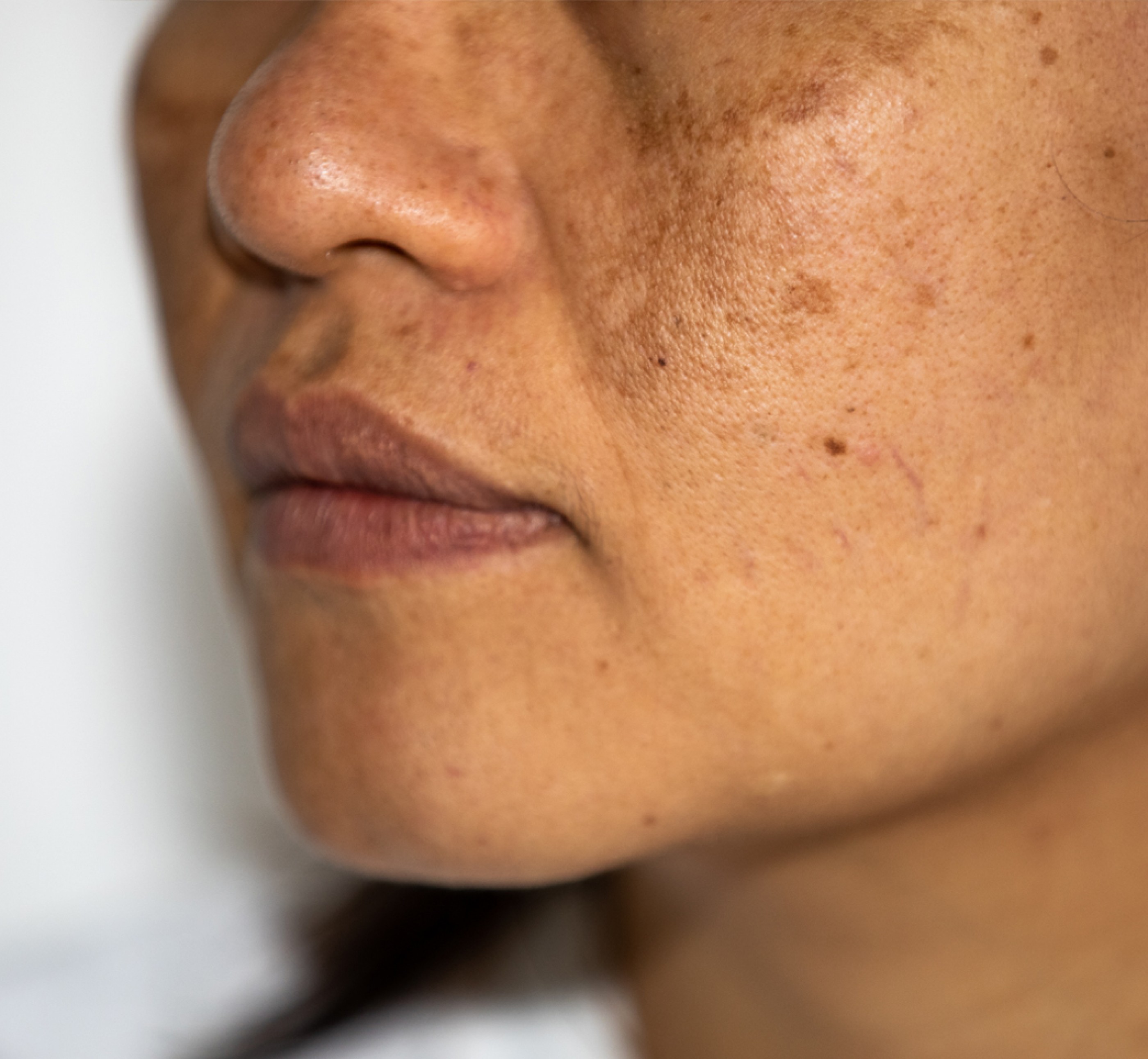
3. Melasma
Melasma — triggered by hormones, heat, sun, or pregnancy — can feel impossible to manage.
Azelaic acid is one of the few brightening ingredients gentle enough to use consistently, which is crucial in melasma care.
4. Redness & Rosacea
People with rosacea often feel frustrated because their skin reacts to almost everything. Azelaic acid helps:
• reduce background redness
• calm flushing
• smooth bumps
• ease sensitivity It’s one of the first ingredients dermatologists reach for in rosacea routines.
5. Sensitive or Reactive Skin
If you’ve tried “strong actives,” only to end up red, dry, itchy, or flaky — azelaic acid gives you results without the irritation.
6. Pregnancy & Breastfeeding
While this article is not pregnancy-focused, azelaic acid is considered safe for pregnant and breastfeeding women, making it one of the few active ingredients you can comfortably keep in your routine.
Why People Love Azelaic Acid (Emotionally & Practically)
✔ It doesn’t burn, sting, or cause peeling People feel relieved to have an active that doesn’t hurt.
✔ It works slowly but steadily Those with long-term skin struggles appreciate that it builds results gradually — without damaging the skin barrier.
✔ It helps multiple concerns at once Acne + dark spots + redness → one product.
✔ It feels safe Especially for pregnant women, sensitive skin types, or those cautious about strong ingredients.
✔ It helps restore confidence Clearer, calmer skin makes daily routines — from makeup, to photos, to skin bare-face days — feel easier.
How to Use Azelaic Acid Properly
✔ Start once daily Apply in the morning or evening. If sensitive, try every other day at first.
✔ Use sunscreen Brightening ingredients work best when paired with SPF.
✔ Moisturize It layers beautifully under moisturizer.
✔ Avoid heavy exfoliants Skip strong AHAs/BHAs or abrasive scrubs.
✔ Stay consistent Expect results in 6–12 weeks.
FAQs
Can I use azelaic acid with retinol?
Yes, just introduce slowly.
Can azelaic acid cause purging?
It’s very unlikely.
Does it lighten the natural skin color?
No. It only reduces excess pigment.
Is it safe for deeper skin tones?
Yes, excellent for melasma and post-inflammatory pigmentation.
Can men use azelaic acid?
Absolutely, men benefit just as much. Is it safe in pregnancy and breastfeeding? Yes, when used topically as directed.
If You Remember One Thing About Azelaic Acid
Azelaic acid is a reliable, universal skincare ingredient. Whether you're dealing with acne, dark spots, redness, sensitive skin, or melasma, it offers steady, gentle results with minimal irritation. If you're unsure how to incorporate it into your routine, our dermatology team at Johns Creek Dermatology in Johns Creek (north Atlanta) can help you build a personalized, effective plan.
Please note: this information is for educational purposes only and is not a substitute for medical advice. Do not start, stop, or change any prescription or over-the-counter treatment without speaking to your own doctor or dermatologist, especially if you are pregnant, breastfeeding, or have underlying medical conditions.