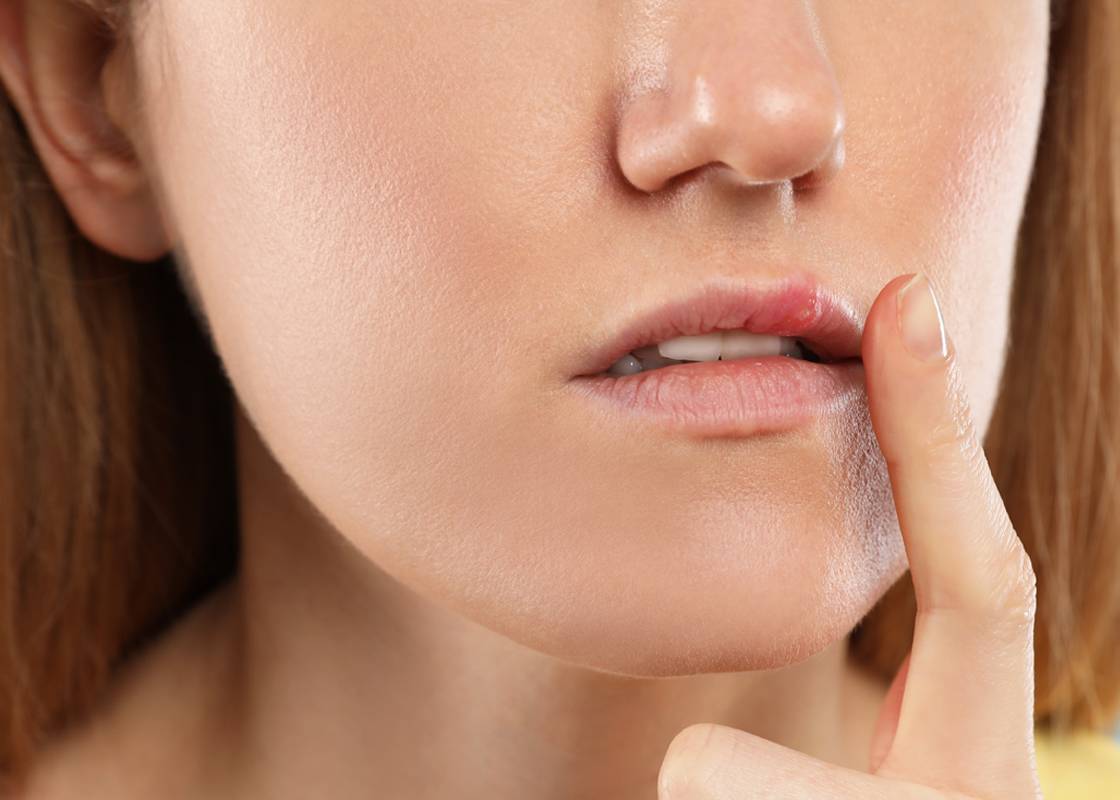
You notice a red bump near your lip.
Is it a pimple? A cold sore? Should you leave it alone, treat it like acne, or worry that it could spread?
Early cold sores and pimples can sometimes look surprisingly similar, particularly when there is only one small bump. But they develop for very different reasons and need different treatment approaches.
One important rule applies to both: don’t pop, squeeze, or pick at it.
Manipulating a pimple can increase inflammation and scarring, while picking at a cold sore can irritate the area and potentially spread virus-containing fluid to other areas.
Here are some of the clues that can help distinguish the two—and when it is better to have the spot evaluated instead of guessing.
What Is a Cold Sore?
A cold sore, sometimes called a fever blister, is caused by the herpes simplex virus (HSV).
Cold sores usually develop on or around the lips and often begin with a warning sensation before anything obvious appears.
You may notice:
- Tingling
- Burning
- Itching
- Tenderness
- A small painful area
Small fluid-filled blisters can then develop, often grouped closely together. The blisters may eventually break, ooze, and form a crust before healing.
What Is a Pimple?
A pimple is an acne lesion.
Acne develops when a hair follicle becomes clogged with oil and dead skin cells and then becomes inflamed.
A pimple near the mouth may look like:
- A red raised bump
- A whitehead
- A pustule
- A deeper tender bump
Unlike a cold sore, a typical acne pimple does not develop because of a viral infection and is not contagious.
Cold Sore vs. Pimple: The Most Important Differences
1. Where Is the Bump?
Cold sores most commonly appear on the lip or immediately around the mouth. They can also occur around the nose or nearby facial skin.
Pimples can develop around the mouth as well, but they generally occur on normal facial skin rather than directly on the lip itself.
A bump directly along the lip border may therefore raise more suspicion for a cold sore, although location alone is not enough to make a diagnosis.
2. Did You Feel Tingling or Burning First?
This can be an important clue.
Many people with recurrent cold sores notice tingling, itching, or burning before the blister becomes visible.
This early stage is sometimes called the prodrome.
A pimple generally does not produce the same characteristic tingling or burning sensation before it develops.
It may, however, become tender as inflammation increases.
3. Is It One Bump or a Cluster of Blisters?
A cold sore often develops as several small fluid-filled blisters grouped together.
A pimple is more likely to be a single inflammatory bump, although acne can certainly cause several nearby lesions.
Look closely at the surface:
Cold sore: multiple tiny blisters may sit close together.
Pimple: often has a more solid bump or a central whitehead.
4. Is There a Whitehead?
A visible whitehead makes acne more likely.
Whiteheads form when oil and dead skin cells become trapped within a follicle.
Cold sores do not typically form a classic acne whitehead.
However, an early cold sore may initially look like a small red bump before obvious blisters appear, which is one reason people sometimes confuse the two.
5. Does It Hurt?
Both can hurt.
Cold sores often cause burning, stinging, tenderness, or pain, particularly as the blisters develop.
An inflamed acne lesion can also become painful, especially if it is deep.
Pain alone therefore does not reliably distinguish the two.
The pattern of symptoms -including tingling followed by blisters- is more useful.
6. Does It Crust Over?
Cold sore blisters can break open and develop a crust as they heal.
A pimple can also form a scab if it is picked, squeezed, or traumatized.
So crusting alone does not prove that something is a cold sore.
What happened before the crust developed matters.
A progression from tingling → grouped blisters → open sore → crust is much more typical of a cold sore.
A Quick Comparison
Cold Sore
More likely to:
- Occur directly on or around the lip
- Begin with tingling, itching, or burning
- Form several tiny fluid-filled blisters
- Feel painful or sensitive
- Break open and crust
- Return in a similar location
- Be contagious
Pimple
More likely to:
- Occur on facial skin near the lip
- Develop without a tingling prodrome
- Appear as one solid inflammatory bump
- Develop a whitehead
- Occur alongside blackheads, whiteheads, or other acne lesions
- Be associated with acne elsewhere on the face
- Not be contagious
Why Does a Cold Sore Keep Coming Back?
After a person acquires herpes simplex virus, the virus remains in the body.
It can become inactive and later reactivate, causing another cold sore.
Recurrences may sometimes be associated with triggers such as:
- Illness
- Stress
- Sun exposure
- Fatigue
- Hormonal changes
- Injury or irritation to the area
Some patients notice that cold sores return in approximately the same location.
Having recurrent lesions in the same spot -especially when they begin with tingling or burning- is another clue that the lesion may be a cold sore rather than acne.
Are Cold Sores Contagious?
Yes.
Cold sores are caused by herpes simplex virus and can spread through close contact. HSV-1 commonly causes oral herpes and can be transmitted through oral contact.
The risk is particularly important when an active sore or blister is present.
If you think you have a cold sore:
- Avoid picking or touching it unnecessarily
- Wash your hands after touching the area
- Avoid sharing lip products
- Avoid sharing items that come into contact with the mouth
- Avoid kissing while an active lesion is present
- Avoid oral contact with another person's skin while the sore is active
And remember that herpes simplex can sometimes be transmitted even when there is no obvious visible sore.
Can You Get a Cold Sore From Kissing?
Yes.
HSV-1 can spread through oral contact, including kissing.
It is important, however, not to automatically assume that acquiring HSV-1 means someone contracted it through sexual contact.
Many people acquire oral HSV-1 during childhood or young adulthood through nonsexual contact with saliva.
Is a Cold Sore the Same Thing as Herpes?
Cold sores are a form of herpes simplex infection.
Most oral cold sores are associated with HSV-1, although herpes simplex viruses are not limited exclusively to one body area.
The word “herpes” can understandably cause anxiety, but oral HSV-1 is extremely common.
The important issue medically is recognizing the lesion correctly, reducing transmission, and treating recurrent or severe outbreaks appropriately.
Is a Cold Sore the Same as a Canker Sore?
No.
This is another common source of confusion.
A cold sore usually occurs on or around the lips and is caused by herpes simplex virus.
A canker sore usually develops inside the mouth, such as on the inside of the cheeks, lips, or near the gums.
Canker sores are not caused by herpes simplex and are not contagious.
This distinction deserves its own article because patients frequently use the terms interchangeably.
What If the Bumps Are Around the Mouth but Aren't Pimples or Cold Sores?
Not every acne-like bump around the mouth is either acne or herpes.
Another condition dermatologists commonly consider is perioral dermatitis.
Perioral dermatitis can cause clusters of small acne-like bumps around the mouth and sometimes around the nose or eyes. It may also cause burning or irritation.
This is why a persistent rash around the mouth should not automatically be treated with acne products.
Should You Pop a Pimple Near Your Lip?
No.
Even when you are fairly certain that the bump is acne, squeezing can increase:
- Inflammation
- Swelling
- Skin trauma
- Post-inflammatory hyperpigmentation
- Risk of scarring
And if what you thought was a pimple is actually an early cold sore, manipulating it is an especially poor idea.
When you aren't sure what the bump is, leave it alone rather than trying to pop it.
Should You Pop a Cold Sore?
No.
Cold sores should not be popped or intentionally opened.
The blisters contain fluid, and manipulating them can irritate the skin, delay healing, and increase the opportunity to spread the virus to other areas.
Wash your hands if you touch an active cold sore.
How Are Cold Sores Treated?
Many cold sores eventually heal without treatment.
However, antiviral medication can sometimes shorten an outbreak or reduce symptoms, particularly when treatment begins early.
For patients who recognize the familiar tingling or burning that occurs before their outbreaks, early treatment may be especially useful.
People with frequent recurrences may also have different treatment options than someone who develops an occasional cold sore.
A dermatologist or other healthcare professional can determine whether prescription antiviral treatment is appropriate.
How Are Pimples Near the Mouth Treated?
Treatment depends on whether the bump is an isolated pimple or part of a broader acne problem.
Acne treatment may include:
- Topical retinoids
- Benzoyl peroxide
- Salicylic acid
- Prescription topical medications
- Oral medication for appropriate patients
Products should be used carefully around the lips because the skin in this area can become irritated easily.
If acne repeatedly develops around the mouth -or what you think is acne is not responding- it is worth confirming the diagnosis.
Can Cold Sores Leave Dark Marks?
Inflammation anywhere on the skin can sometimes leave temporary discoloration afterward.
Patients who are prone to post-inflammatory hyperpigmentation may notice a darker mark after a cold sore or pimple heals.
Picking at either lesion can increase the inflammation and make pigmentation more noticeable.
When Should You See a Dermatologist?
Many isolated pimples and uncomplicated cold sores resolve without an office visit.
But consider getting the area evaluated when:
- You aren't sure whether it is a cold sore or pimple
- The lesion is very painful
- It keeps returning
- Multiple lesions are appearing
- The diagnosis is unclear
- The area is becoming increasingly red or swollen
- You see pus or significant drainage
- The lesion isn't healing
- You are developing noticeable scarring or pigmentation
- Your usual treatment has stopped working
Medical evaluation is particularly important for a suspected cold sore near the eye. Cold sores that are very painful, numerous, persist beyond about two weeks, or recur frequently are also reasons to seek medical care.
A Special Warning About the Eye
A blistering or painful eruption near the eye should not simply be treated as acne at home.
Herpes simplex can involve the eye and requires prompt medical attention.
If you develop a suspected cold sore near the eye, eye pain, significant redness, light sensitivity, or vision changes, seek medical care promptly.
Frequently Asked Questions
Can a cold sore look like a pimple at first?
Yes.
Before obvious fluid-filled blisters form, an early cold sore may initially appear as a small red or tender bump.
Tingling, burning, itching, recurrence in the same area, and the later development of grouped blisters can help distinguish it.
Can a pimple form directly on the lip?
Acne generally develops in hair follicles and is more typical on the skin surrounding the lips than on the pink portion of the lip itself.
A lesion directly on the lip deserves a closer look before assuming it is acne.
Does a cold sore always form several blisters?
Not necessarily.
Symptoms vary, and mild herpes infections can sometimes be subtle.
Do not rely on a single feature to diagnose yourself.
Does a cold sore always tingle first?
No.
Tingling, burning, and itching are common warning symptoms, particularly with recurrent cold sores, but not everyone experiences them.
Can herpes look like acne?
Yes.
Herpes lesions can sometimes be mistaken for pimples or ingrown hairs, particularly when symptoms are mild.
Can stress cause a pimple or a cold sore?
Stress may be associated with acne flares and may also be a trigger for recurrent cold sores in some people.
That means timing alone does not necessarily tell you which one you have.
Can I use acne medication on a cold sore?
Acne medications are designed to treat acne, not herpes simplex.
Some acne products may also irritate an open or blistered cold sore.
If you are uncertain what the lesion is, confirm the diagnosis rather than repeatedly applying different treatments.
Are cold sores always sexually transmitted?
No.
Oral HSV-1 is commonly acquired through nonsexual contact, and many people acquire the infection during childhood or young adulthood.
Remember...
A pimple and a cold sore can look similar at the beginning, especially when there is only one small red bump near the mouth.
But there are useful clues.
Think cold sore when you notice tingling or burning followed by small grouped blisters, particularly along the lip border or when the lesion repeatedly returns in the same location.
Think acne when you see a solid inflammatory bump or whitehead, particularly when there are other blackheads, whiteheads, or pimples nearby.
And when you aren't sure?
Don't pop it.
Give the lesion time to declare itself, and if it is painful, recurrent, spreading, not healing, or simply doesn't look right, have it evaluated.
A board-certified dermatologist can distinguish acne from cold sores and other conditions that can mimic them and recommend the appropriate treatment.
If a persistent or recurring bump around your mouth has you wondering whether it's acne or something else, request a dermatology evaluation.